
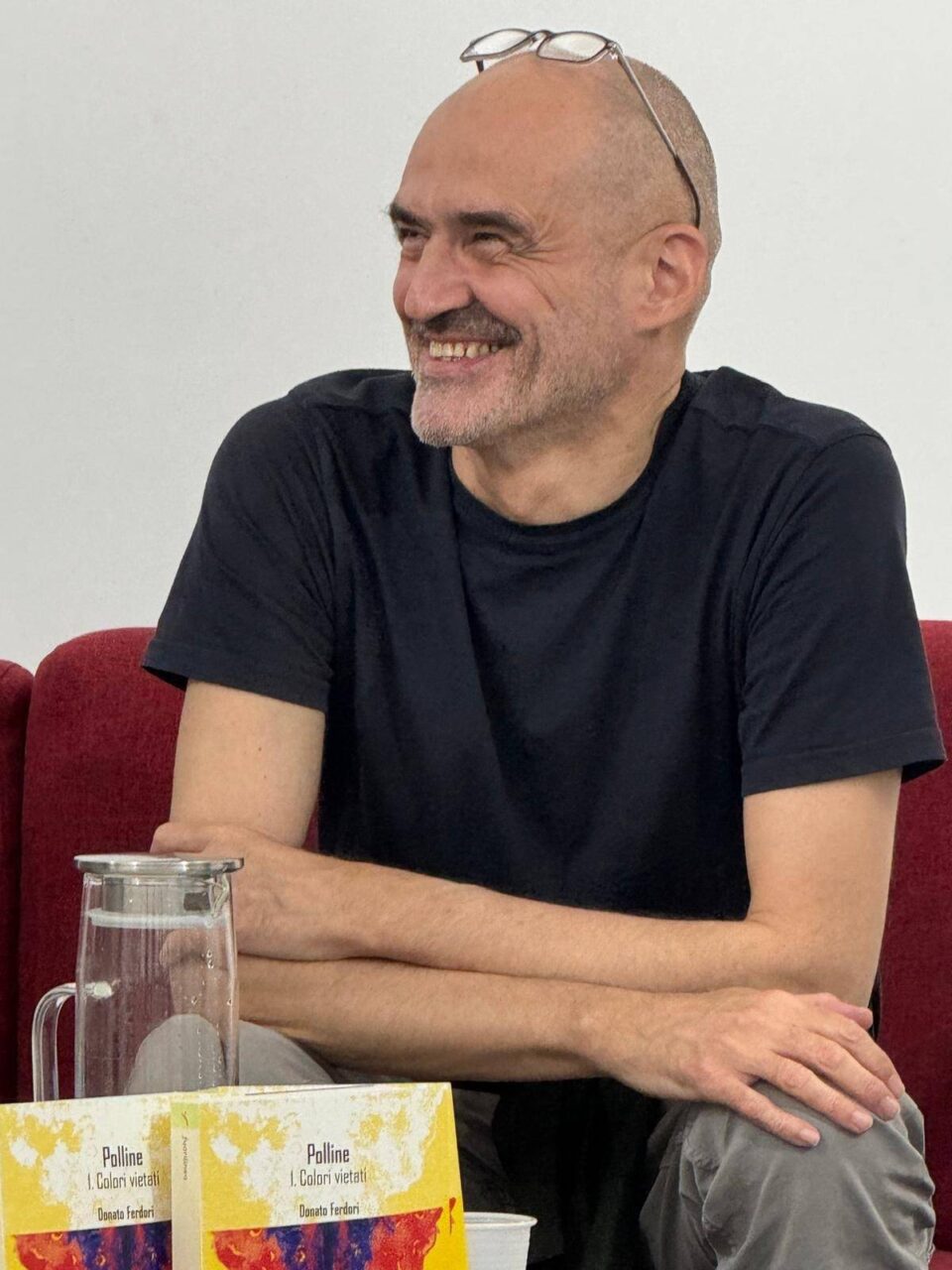
November 3, 2026, Occupied Palestine. Italian teacher and solidarity activist Donato Ferdori, 56, remains imprisoned at Givon prison in Israel, following his arrest on October 29 while accompanying Palestinian farmers during the olive harvest in al-Lubban al-Gharbi, northwest of Ramallah. Ferdori is now expected to return to Italy on Thursday, November 5, after being transferred to Egypt through the Taba border crossing.
This morning, Ferdori was allowed three phone calls from prison, during which he provided the first detailed account of the treatment he received in Israeli custody and confirmed that he appeared in front of a judge without legal representation. Speaking to Italian journalist Maria Cristina Fraddosio, Ferdori described repeated psychological abuse, humiliation and physical mistreatment:
“I didn’t do anything illegal. They took me to the prison from which I’m calling you now. I suffered continued psychological violence and some physical violence, luckily not serious. I don’t have injuries. I was repeatedly pushed. I was stripped for no reason; they laughed at me.”
Describing the circumstances of his arrest, Ferdori said:
“We were harvesting olives and armed settlers arrived. We left with the harvest and they followed us. We stopped in a house at around 2 p.m. and the occupation forces arrived. After two hours they showed us the alleged closed military zone order. They invented it. There was no such order.”
He also confirmed that he had appeared before the judge alone:
“I wasn’t allowed to see the lawyer since the arrest. I decided to resist because we were unjustly arrested. I was in front of a judge alone, she said ‘you are right but I can’t do anything. The prison goes ahead with its rules.”
Ferdori refused immediate administrative deportation following his arrest, choosing instead to await judicial review because he considered his detention unlawful. On November 1, he appeared before a judge without legal representation. His lawyer, Alon Sapir, had not been notified of the hearing, despite repeatedly contacting the detention facility to obtain information about his client. Sapir described the proceedings as “a serious breach of Ferdori’s right to an attorney”.
According to information received today, Ferdori will be transported from Givon prison to the Egyptian border on Wednesday, November 4, a journey of more than 300 kilometres, before being handed over to Egyptian authorities. His onward journey remains uncertain, with conflicting information about whether he will travel to Cairo to board a flight to Rome or depart directly from Taba airport.
Ferdori’s sister, Chiara, who spoke with him today for the first time in several days, expressed relief at the news of his return but concern about the arrangements:
“This morning i finally spoke with my brother. He called from prison. He was tired but in good spirit; he said they have been difficult days. He is certain he made the right choice by refusing the administrative deportation. He did it because he thinks that what is happening in the West Bank is unfair. He thinks public attention should be brought to this. He said he suffered repeated psychological violence and mockery. I am happy to know he will be home on Thursday but I am worried about the long journey. I do not understand why instead of a flight from Tel Aviv, they decided to send him to Egypt and from there it is not clear if he will have to reach Cairo with another means of transportation. It is more than 9 hours of journey. I don’t even know how they will deal with his bag as it is stopped at Tel Aviv airport since the day of the arrest”.
Ferdori’s case follows a similar incident earlier in October, when four international solidarity activists – three US citizens and one German citizen – were arrested while accompanying Palestinian farmers during the olive harvest in Jamma’in, south of Nablus, and deported on October 3 and 4. They also were denied access to legal counsel before their immigration hearings, despite repeated attempts by their lawyer to contact Israeli authorities. The two incidents show a recurring pattern of obstructed access to legal representation in proceedings against international activists accompanying Palestinian farmers.
Ferdori was detained alongside 13 other international activists after armed settlers from the Avichai Farm outpost forced Palestinian farmers and their supporters to abandon their olive harvest. The settlers pursued the group into the village, where Israeli occupation soldiers surrounded a house in which the activists had taken shelter. All 14 were arrested on allegations of violating a closed military zone order, which had not been presented to them on the agricultural land.
During their detention, the activists identified as men were handcuffed and shackled at the ankles, with some chained together in pairs. They were forced to strip to their underwear, searched and held in a high-security cell before being transferred to Yahalom Detention Center in chains. The other 13 activists have since returned to their countries of origin.
The arrests come amid escalating violence against Palestinian communities in the West Bank. The detention and deportation of international volunteers further undermine the solidarity presence requested by Palestinian communities facing attacks, land dispossession and forced displacement.
Previous releases:
https://palsolidarity.org/2026/10/for-immediate-release-14-international-solidarity-activists-face-deportation-for-accompanying-palestinian-olive-harvester-in-al-lubban-al-gharbi/
https://palsolidarity.org/2026/10/update-for-immediate-release-italian-teacher-detained-at-givon-prison-after-refusing-deportation-following-mass-arrest-during-palestinian-olive-harvest/