
Ramadan is the holiest month for Muslims. It holds a deep spiritual, religious and communal meaning within Islam, including for most Palestinians. However, the Israeli occupation, the escalation of violence from colonial settlers, and the context of attacks by the United States and Israel against Iran, has significantly affected this observance in the occupied Palestinian territories, like in the West Bank.
The Al‑Aqsa Mosque (Al-Quds, Jerusalem) has been closed or heavily restricted to much of the population. Important Friday prayers during Ramadan have been cancelled, and many people have ended up praying outside the compound or in nearby streets because they could not access the site.
In Al‑Khalil (Hebron), the Ibrahimi Mosque has also faced strong restrictions. Over the past two weeks, international activists have witnesses how only about 50 people have been allowed to enter for Friday prayers, leaving hundreds of worshipers outside the gates, even though the site can accommodate several thousand people. Many of these Palestinians travel from towns located kilometers away and end up being turned away at the entrance. One woman described walking for two hours to attend the midday prayer, only to find that she was not allowed to enter.

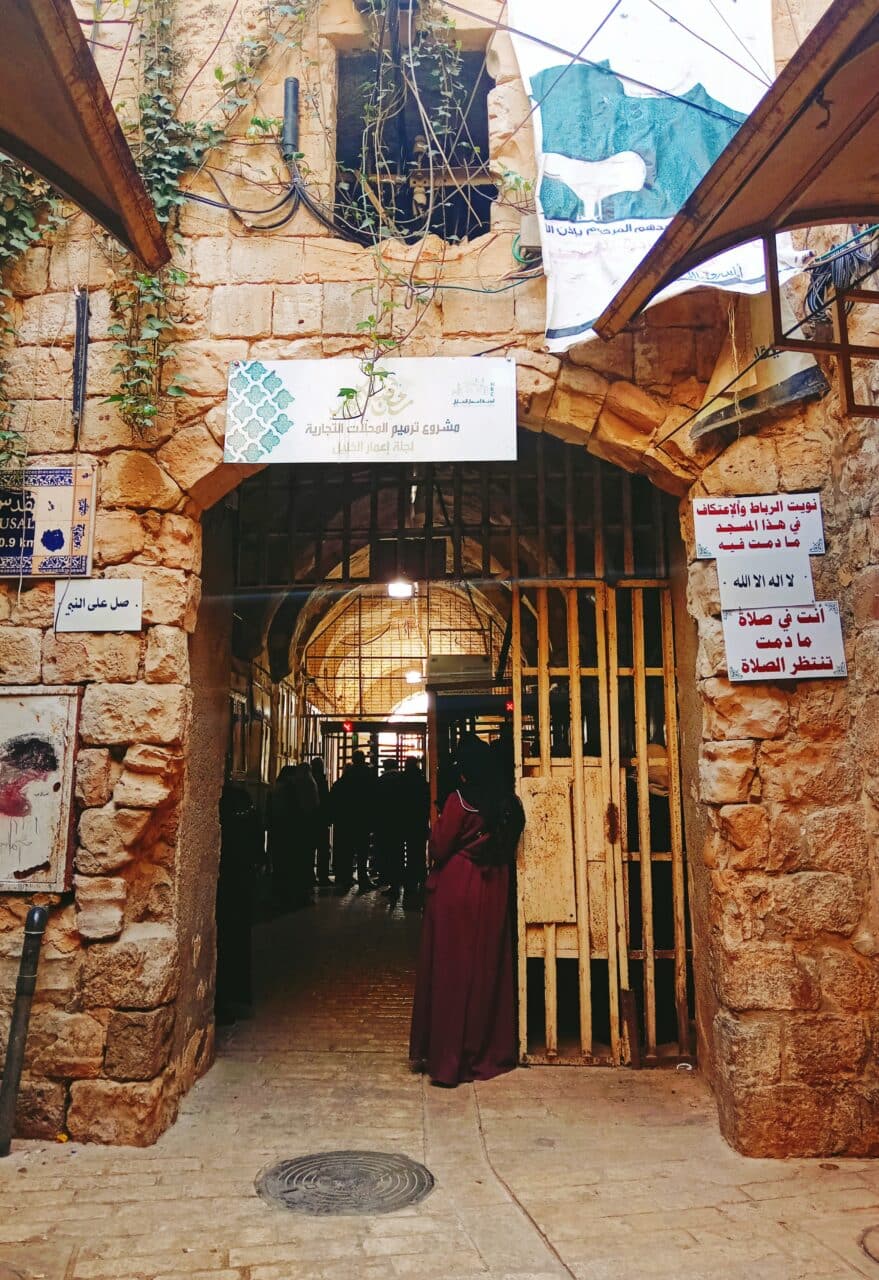
This situation has contributed to an almost ghost-like atmosphere in Al Khalil’s old city, where military presence, closures and checkpoints have drastically reduced everyday life and access to religious spaces. Al Khalil (Hebron) is the second largest city in the West Bank and an important center for trade and economy due to its close position to Gaza. Following the Oslo Accords, Al Khalil was the only city that got excluded from the process of giving back Palestinian authority the access and rule over their state land¹. In 1997, it got divided into two sectors: H1 which is under Palestinian control and authority/administration and where 120,000 Palestinians are living, and H2 which is occupied by the Israeli authority and home to 30,000 Palestinians and 700 settlers. But t The number of Palestinians living in H2 is declining due to daily harassment and attacks from settlers and the closing of their shops.
These developments raise serious concerns regarding international law and the right to practice religion. They also occur within broader dynamics of violence escalation, zionist control and colonialism restrictions.


¹To provide historical background. In April 1968 a group of Israeli settlers occupied the park hotel in Al Khalil in order to start their colonial presence. After this illegal occupation, the Israeli ministry allowed the construction of Kiryat Arba, now one of the biggest settlements in the West Bank. In 1980, Al Khalil became the hot-spot for the Kach movement and party which was founded by Meir Kahane and got designated as a terrorist organization also by the Israeli state in 1994. Baruch Goldstein one of the members of Kach massacred 29 Palestinians and wounded 125 while they were praying in the Ibrahimi Mosque on the 25th February 1994. The survivors managed to kill the terrorist while the Israeli soldiers just stand by and watch since their only duty is to protect Israeli settlers. As a result of this massacre the movement of Palestinians in Al Khalil got restricted. All vegetable and meat markets got closed down and it was forbidden to enter to the Shuhada Street, which was one of the most important Palestinian market streets turning it into a ghost street.